
Truck Wheel Alignment Cost in Australia: 2026 Prices, Factors & Warning Signs Explained
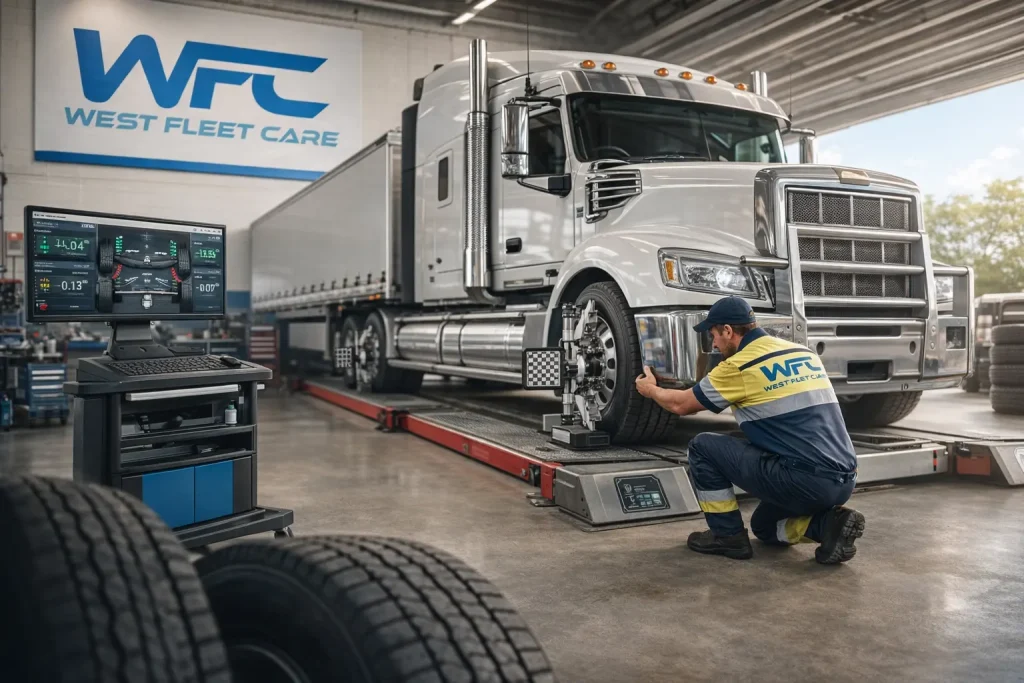
A small misalignment in your truck might not seem urgent, but it can quietly cost you thousands in tyre wear, fuel inefficiency, and unexpected downtime.
In Australia, truck wheel alignment cost typically ranges from $100–$150 for light trucks and 4x4s, and $190–$450+ for heavy vehicles, prime movers, and multi-axle fleets, depending on the setup and condition.
But here’s the problem – most operators only focus on the tyre alignment cost, not the real cost of ignoring it.
That’s where this guide helps. You’ll learn what actually affects wheel alignment price, how to spot early warning signs, how often to align your truck, and how to avoid unnecessary vehicle alignment costs, especially for fleets and mining vehicles in Perth.
So, if you want to reduce tyre wear, prevent breakdowns, and keep your trucks working, keep reading.
How Much Does a Truck Wheel Alignment Cost in Australia?
Truck wheel alignment cost in Australia typically starts from about $190+ for standard heavy trucks and can climb to $450+ for larger multi-axle trucks.
Semi-trailers are usually priced per axle, with costs starting around $150+ for a single axle and increasing to $300+ or more for multi-axle trailers. For lighter vehicles such as 4x4s and small trucks, the wheel alignment cost is lower, but still depends on the vehicle type and adjustments required.
Typical Truck Alignment Price Ranges in 2026
- Light truck / 4×4: around $100–$150 for a standard front-end alignment
- Heavy trucks (prime movers / body trucks):
- Basic front steer alignment: $190+
- Steer + drive axle alignment: $240+
- Multi-axle (bogie drive) alignment: $290+
- Large multi-axle trucks: $400–$450+
- Semi-trailers: from $150+ per axle, depending on axle count
Simply, the more axles and the more complex the steering/suspension setup, the higher the wheel alignment charges.
That is why a heavy fleet vehicle can cost much more than a basic front-end alignment on a lighter truck. Proper alignment also helps reduce tyre wear and improve fuel efficiency, which is exactly why many Perth operators treat it as a maintenance cost, not an optional extra.
What Factors Affect Truck Wheel Alignment Cost?
Truck alignment prices vary based on the level of adjustment required. And every job starts with a full inspection of the steering and suspension system.
A standard alignment check includes inspecting shackle pins and bushes, track rod bushes, kingpins, tie rod ends, draglink ends, tyre pressures, axle setback, and alignment angles such as castor, camber, and toe.
If any mechanical issues are found, they are addressed first before proceeding.
Once the truck is confirmed to be mechanically sound, the alignment can begin. However, the final wheel alignment cost still depends on several key factors, including the following:
1- Number of Axles
The more axles a truck has, the more complex the alignment becomes. Each axle adds extra measurements and adjustments.
That is why a standard truck with fewer axles is cheaper to align than a large multi-axle truck. Semi-trailers also take longer and are usually priced per axle, which increases the overall wheel alignment cost.
2- Truck Type and Load
Different trucks require different levels of work.
Smaller or rigid trucks are generally quicker and cheaper to align. In contrast, heavy trucks, mining vehicles, and fleet trucks need more precise alignment because they carry heavier loads and operate in tougher conditions.
In Perth, this is often treated as a fleet service, not a basic alignment job.
3- Suspension and Steering Condition
Alignment cannot fix worn or damaged parts.
If components like bushes, kingpins, tie rods, or drag links are worn, they must be repaired first. This is one of the main reasons why vehicle alignment cost can increase.
That is why workshops always perform a detailed inspection before starting alignment.
4- Axle Setup (Vehicle Complexity)
Trucks with more complex setups require more precision.
Larger trucks with multiple steering or drive axles need all wheels aligned correctly. If one axle is out, it can affect the entire vehicle, causing uneven tyre wear and poor handling.
This is why full-vehicle alignment is more important than just a basic front-end adjustment.
5- Suspension Type
Different suspension systems affect both time and cost.
Air suspension and heavy-duty spring systems often require more specialised work. In some cases, extra steps are needed to access and adjust components properly, which can increase alignment charges.
6- Inspection and Repair Work
A proper alignment is not just a quick adjustment—it is a process.
It starts with inspection and then moves to correction. If faults are found, they must be fixed first. This ensures accurate results but can increase the total wheel alignment cost.
The benefit is fewer repeat issues and better long-term performance.
7- Workshop vs Mobile Service
In Perth, you can choose between workshop service or a mobile mechanic for trucks.
- Workshop: Best for complex jobs and detailed repairs
- Mobile service: Saves time, avoids towing, and reduces downtime
For many fleet operators, mobile service is the more efficient option.
8- Perth vs Regional WA Conditions
Location also affects alignment needs. Perth-based trucks have easier access to workshops, while trucks operating in regional WA or mining sites often rely on onsite servicing to stay productive. This is why mobile support is essential for remote and heavy-duty operations.
For trucks and trailers, the best results come from correct alignment across all axles, not just the front end. That is what protects tyre life, supports fuel economy and helps reduce driver fatigue. When multiple axles are adjusted together, the vehicle is more likely to track straight and wear tyres evenly.
Next, it makes sense to look at the warning signs that tell you your truck is already due for an alignment.
Signs Your Truck Needs Wheel Alignment
If your truck is out of alignment, it will usually show clear warning signs. The most common ones include:
- Pulling to one side while driving
- Uneven or rapid tyre wear
- Steering vibration or instability
- Increased fuel consumption
- Steering wheel not centred properly
These signs should not be ignored. Even a small alignment issue can quickly lead to higher cost of wheel alignment, tyre damage, and reduced safety, especially for heavy vehicles and fleet trucks operating across Perth and WA.
Tyre Pressure Also Matters
Before assuming it is only an alignment issue, always check your tyre pressure. Incorrect tyre pressure is one of the most common causes of tyre wear. Both over-inflation and under-inflation can reduce the tyre’s contact with the road, affecting performance and safety.
So, why tyre pressure and alignment work together?
Correct tyre pressure ensures proper road contact, while alignment ensures the wheels track straight. If either is wrong, you will see poor tyre wear and higher operating costs. That is why both should always be checked together during truck and trailer repair or maintenance.
How Long Does a Truck Wheel Alignment Take?
The time required for a truck wheel alignment depends on the size of the vehicle and its condition.
- A basic front-end alignment can take around 90 minutes
- A full alignment with adjustments may take several hours
- A complete suspension repair or rebuild can take 2 to 3 days
The more complex the vehicle, the longer the process. Trucks with multiple axles, damaged suspension parts, or heavy wear will take more time because additional repairs may be needed before alignment can be completed.
How Often Should You Align Your Truck Wheels?
Most trucks should have a wheel alignment check at least once every 12 months. However, for heavy-use vehicles such as mining trucks and fleet vehicles in Perth, it is recommended to check alignment every 30,000 km to 60,000 km, or even sooner depending on working conditions.
If your truck operates on rough terrain, carries heavy loads, or runs long distances daily, alignment should be checked more frequently. Small alignment issues can quickly turn into major tyre wear problems, increasing your overall vehicle alignment cost.
It is also a smart practice to perform a wheel alignment whenever you install new tyres. This helps ensure even wear and gives you the best value for your tyre investment.
When Should You Book a Truck Wheel Alignment?
You should not wait for visible damage before booking an alignment. Instead, schedule a check when any of the following situations occur:
- After 30,000 km to 60,000 km of driving
- After suspension or steering repairs
- After replacing tyres
- After hitting potholes, kerbs, or rough terrain (especially in mining environments)
- When you notice signs like pulling, vibration, or uneven tyre wear
For Perth operators, regular alignment checks can also be included in routine vehicle inspections to catch issues early and avoid costly breakdowns.
Can I Align My Truck Myself?
Truck wheel alignment requires high precision and specialised equipment, so it is best handled by a professional mechanic. Modern trucks use specific alignment angles such as camber, caster, and toe, which must be adjusted accurately. Even a small error can lead to ongoing tyre wear and poor handling.
In some cases, you may be able to make minor adjustments, such as correcting the toe angle after replacing parts like tie rods. However, this is not a complete alignment.
For reliable results, especially for heavy vehicles and fleets, it is always recommended to get help from a professional truck maintenance and repair specialist or a mobile mechanic for trucks.
Losing money on tyres, fuel, and downtime due to poor alignment?
Come to West Fleet Care for Reliable Truck Wheel Alignment Services in Perth
At West Fleet Care, we understand that every hour your truck is off the road costs you money. That is why we provide fast, reliable, and professional truck wheel alignment services in Perth, designed to keep your fleet moving.
Why choose West Fleet Care:
- Scania specialists with deep industry expertise
- Extensive mining and heavy vehicle experience
- Mobile repairs and onsite service to reduce downtime
- Emergency response when you need urgent support
Whether you need routine maintenance or urgent repairs, our team ensures your trucks stay efficient, safe, and ready for work.
Book Your Truck Alignment Today
FAQs
- How much would a wheel alignment cost for a truck?
Truck wheel alignment cost typically ranges from $190 to $450+, depending on the number of axles, suspension condition, and type of vehicle.
- Can I drive with bad alignment?
Yes, but it is not recommended. Driving with bad alignment can cause uneven tyre wear, poor handling, and increased fuel consumption. It can also lead to higher repair costs if ignored.
- Is there an extra fee for alignment on a 4×4 truck?
In many cases, yes. 4×4 trucks may require additional adjustments, especially if rear alignment is involved, which can increase the overall wheel alignment cost.
- Do trucks get a 4-wheel alignment?
Yes, but for trucks, alignment usually involves adjusting multiple axles rather than just four wheels. Proper alignment ensures the entire vehicle tracks straight and reduces tyre wear.
- How much does a front-end alignment cost?
A front-end alignment for light trucks or 4x4s usually costs around $100–$150, while heavy trucks can cost significantly more depending on the setup.